By Julia Howard
Most of us know more about where our morning coffee was grown than where the meat on our dinner plate came from. At the farmers’ market, that can change with one simple question: How did you raise this?
Buying meat directly from a farmer gives you something that is difficult to find on a supermarket label: access to the person who raised the animal. You can ask what it ate, whether it lived outdoors, how it was cared for, where it was processed, and even how to cook the cut you’re taking home. And the answers aren’t always the same.
At Ghost Light Farm, Bill Morrow raises Black Angus cattle as a “whole-life beef producer.” Calves are born on the farm and spend their entire lives on pasture with access to grass, spring-fed water, and sunshine. Finishing cattle are also fed corn and spent brewers grain.
At Wintervine Farm, Beth and Bob Bartell raise White Dorper sheep entirely on pasture without grain. Their flock is moved to fresh sections of pasture every few days using a cell-grazing system that allows previously grazed areas 50 to 60 days, or longer, to recover. The sheep graze, fertilize and aerate the soil before moving on.
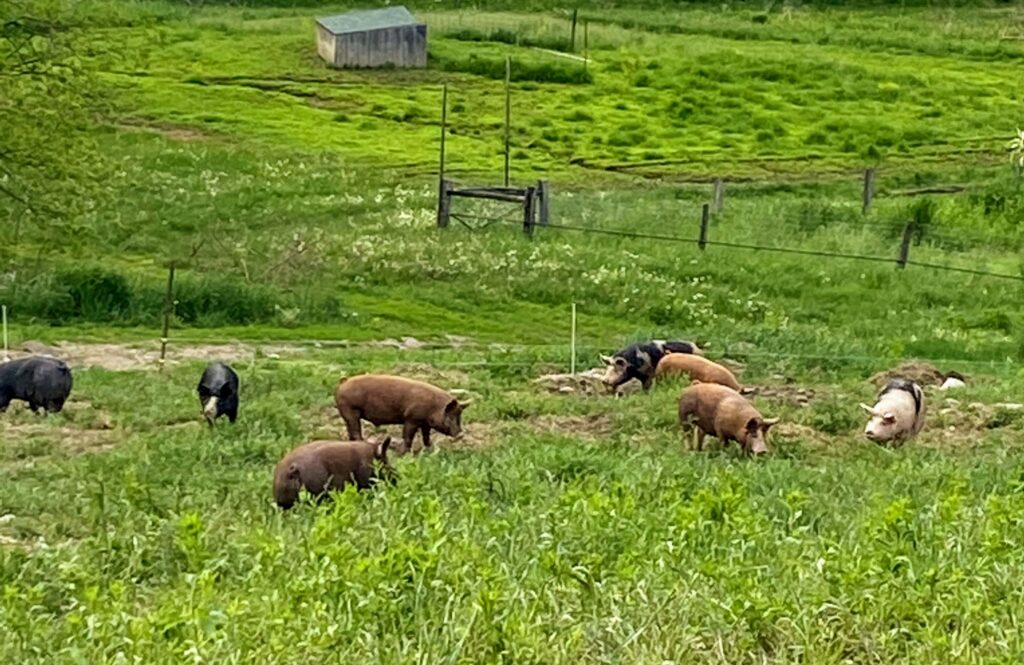
And at Grazin’ Acres Farm, Meghan Mattison and her family raise heritage-cross pigs outdoors on pasture, where they can roam, root and wallow in the mud. The pigs are fed locally sourced non-GMO grain, and the farm uses a local butcher.
That’s part of what makes knowing your farmer so valuable. You don’t have to make assumptions about how an animal was raised. You can ask.
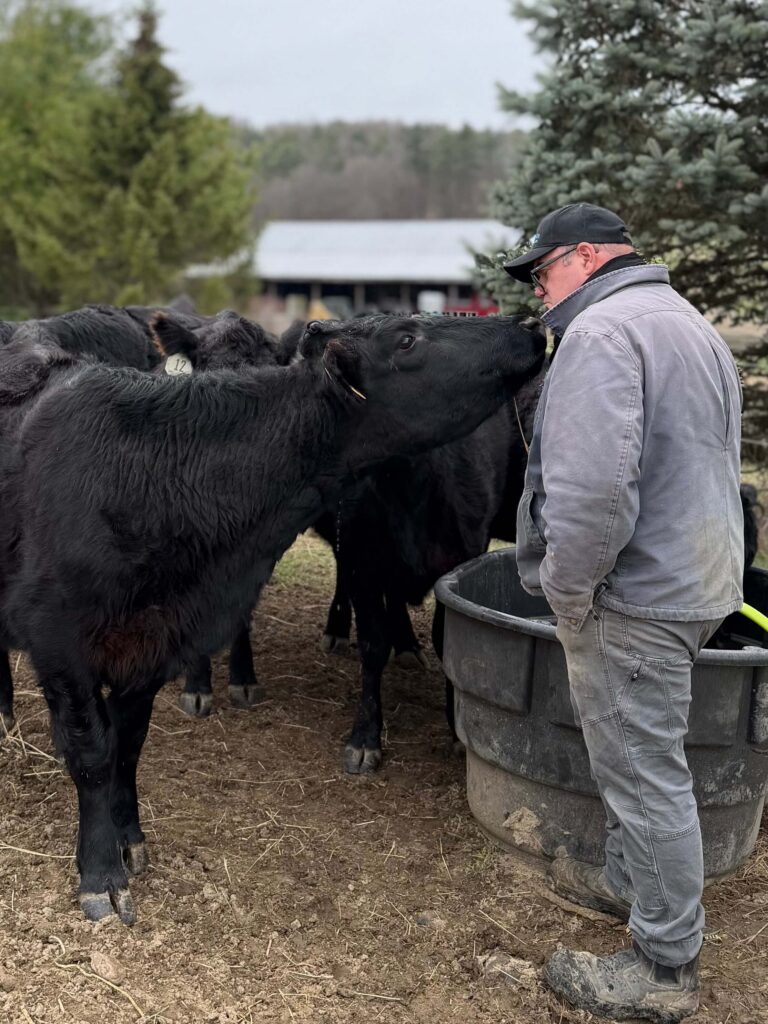
Buying directly also gives customers a better understanding of what it takes to raise animals on a small farm. Morrow notes that 96% of New York cattle herds have fewer than 50 head. These farms don’t have the purchasing power, infrastructure or transportation advantages of large-scale meat producers. Purchasing from a local farm helps pay for fencing, local feed and hay, processing, transportation, and the many other costs of running a farm. In turn, much of that money supports other businesses in our region.
For many customers, the next question is understandably about cost. One way to stretch your budget is to look beyond the most familiar cuts.
“There is only so much bacon and so many pork chops on a pig,” Mattison says. She encourages customers to try cuts such as fresh ham, which her family marinates overnight before baking. Morrow recommends Denver steak, a well-marbled cut from the chuck that he says is tender like a ribeye at about half the price. Bartell remembers her mother marinating inexpensive lamb stew meat in a homemade teriyaki sauce before turning it into grilled kabobs, a favorite she still enjoys today.
Buying larger quantities can also help. Wintervine Farm, for example, offers half and whole lambs at a lower price per pound.
Perhaps that’s one of the greatest advantages of buying meat directly from a farmer: you don’t have to know everything before you approach the table.
Ask how the animals were raised. Ask what fits your budget. Try something unfamiliar. And when you’re holding a cut you’ve never cooked before, ask the farmer the simplest question of all:
“What would you do with this?”
The Saratoga Farmers’ Market is open Wednesdays, 3–6 PM, and Saturdays, 9 AM–1 PM, at High Rock Park in downtown Saratoga and Mondays, 2–5 PM in Clifton Park. Visit saratogafarmersmarket.org to sign up for the weekly newsletter, and follow the market on Facebook and Instagram.