By Rose and Dan Fera
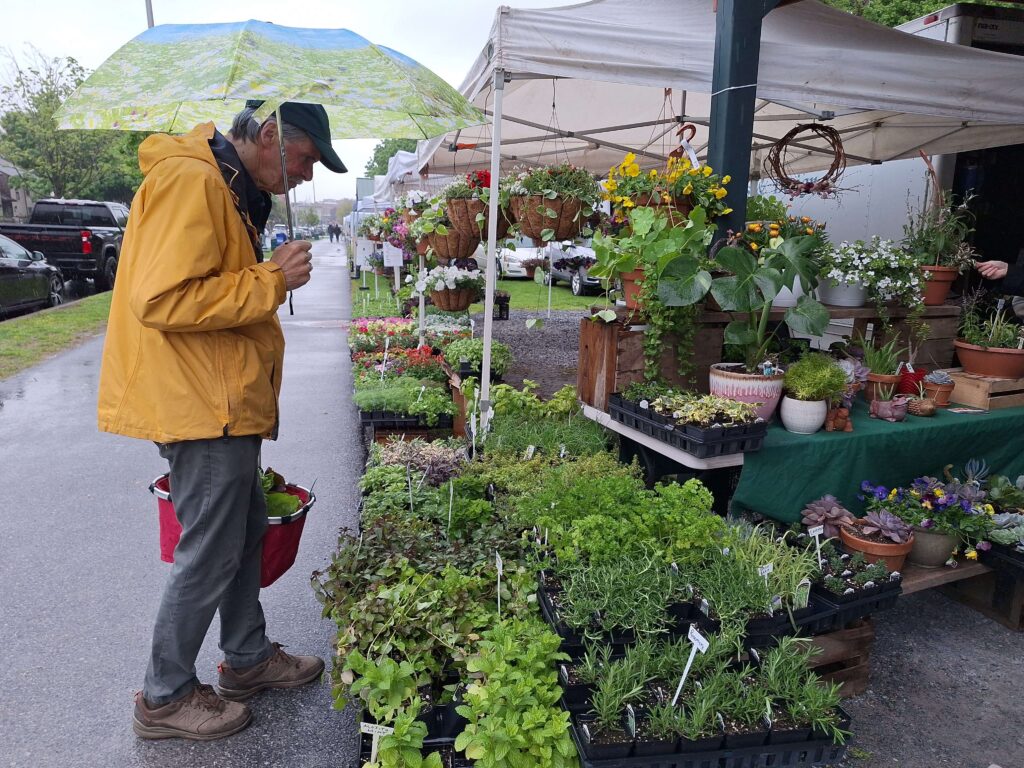
The sun is out, the soil has warmed, and it’s time to head out to look for plants for your summer garden. Here are a few tips about what to look for when choosing some common vegetable transplants.
When selecting your garden plants, we recommend avoiding multi-packs of tomatoes, peppers, and eggplants. Although they may seem like a bargain, they are often rootbound and oversized for their containers. If you go this route, you should plan on repotting them into larger containers for a couple of weeks before transplanting them into the garden. We’ve found 4”-5” pots to be large enough for adequate root development, allowing your plants to take off quickly once transplanted.
Most other garden vegetables, such as cucumbers, zucchini, and other squashes, as well as lettuces and greens, are fine in multi-packs as long as the cells they’re planted in are large enough. The important thing is that the plant doesn’t seem outlandishly large for the container it’s growing in. A 12” tall tomato in a tiny cell will take a much longer time to establish compared to one grown in a larger pot.
After purchasing your plants, be sure to keep them watered. Plants perform best when thoroughly watered and then allowed to dry back. The soil should not stay soggy, because the roots need air, but should never be allowed to dry out completely.
Plants are ready for transplant when the roots have nicely filled the pot. You should be able to remove the plant from the pot by gently pulling on the stem, leaving no soil behind, with lots of visible roots but not circling around the inside of the pot.
To prep your garden for planting, you can use a rototiller or dig it by hand. If this is a new garden plot, we highly recommend rototilling, as hand-digging is an arduous task. We believe that using organic methods will help you improve your soil over time, resulting in healthier plants. The use of compost is central to organic growing. We recommend a good shovelful every 2’-3’, raked into the soil. Be sure to also use a high-quality, organic fertilizer when you transplant, and side-dress every few weeks during the season. Espoma and North Country Organics are two brands we have used in our own garden with excellent results.
When it’s time to transplant, be sure to have water at hand and avoid planting during the hottest part of the day to lessen the shock to your tender plants. First, work the compost and fertilizer into the soil of your garden bed. The holes for smaller plants can be made using just your fingers, but holes for larger plants will be easier to dig with a trowel. Make each hole large enough for the plant’s root ball. Place the seedling in the hole, keeping the top of the root ball level with the soil surface. An exception to this rule would be tomatoes, which can be planted deeper, with the soil burying the lower stem. Roots will grow from the buried stem, creating additional roots to support a larger plant and more fruit. Cover the roots with the loose soil, and water it in well. Keep your young transplants well-watered and check them daily to be sure they don’t dry out. Before you know it, you’ll be harvesting delicious vegetables from your own backyard!
You can find garden transplants at the following farms at the Saratoga Farmers’ Market: Leaning Birch Farm, Balet Flowers & Design, Burger’s MarketGarden, Gomez Veggie Ville, and Lovin’ Mama Farm.
The Saratoga Farmers’ Market is open on Wednesdays from 3:00 to 6:00 p.m. and Saturdays from 9:00 a.m. to 1:00 p.m. at High Rock Park in Downtown Saratoga. Find us online at https://saratogafarmersmarket.org, where you can sign up for our weekly newsletter, and follow us on Facebook and Instagram @saratogafarmersmarket.