By Dan and Rose Fera
For health-conscious and environmentally aware shoppers, “organic” promises food grown without synthetic pesticides, genetically modified organisms (GMOs), or artificial fertilizers. However, a fluorescent-lit supermarket aisle offers a very different organic product than a weekend farmers’ market. While both options offer organic products, they reflect fundamentally different philosophies of agriculture, economics, and sustainability. Understanding the difference between the two is key to making truly informed food choices.
The Corporate Standard: Commercial USDA Organic
To understand commercial organic food, one must understand the USDA National Organic Program. Established to create a uniform standard, the USDA organic seal guarantees that a product meets strict federal regulations. For large commercial growers, achieving certification is a rigorous, bureaucratic, and expensive process involving meticulous record-keeping and mandatory third-party inspections.
The primary advantage of commercial USDA organic is accessibility. It allows large-scale monoculture farms to distribute organic fruits, vegetables, and meat to supermarket chains nationwide, making organic food available to millions of consumers at relatively stable prices.
However, “commercial organic” is still commercial. Crops are bred for durability and shelf life rather than peak flavor. A commercial organic tomato might be free of synthetic chemicals, but it is often picked green, chilled, and then shipped thousands of miles in a carbon-emitting semi-truck. Because large-scale organic farming relies on allowed organic pesticides and intensive mechanized tilling, it can sometimes mirror the environmental strain of conventional industrial farming, albeit without the synthetic chemical runoff.
The Community Standard: Farmers Market Organic
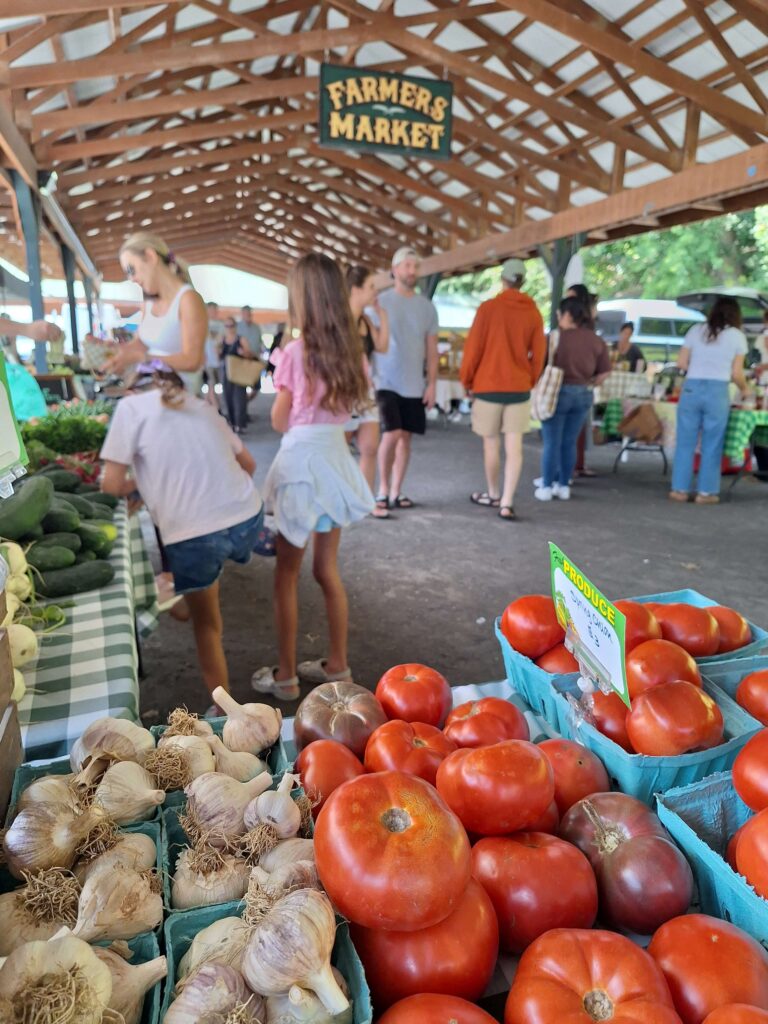
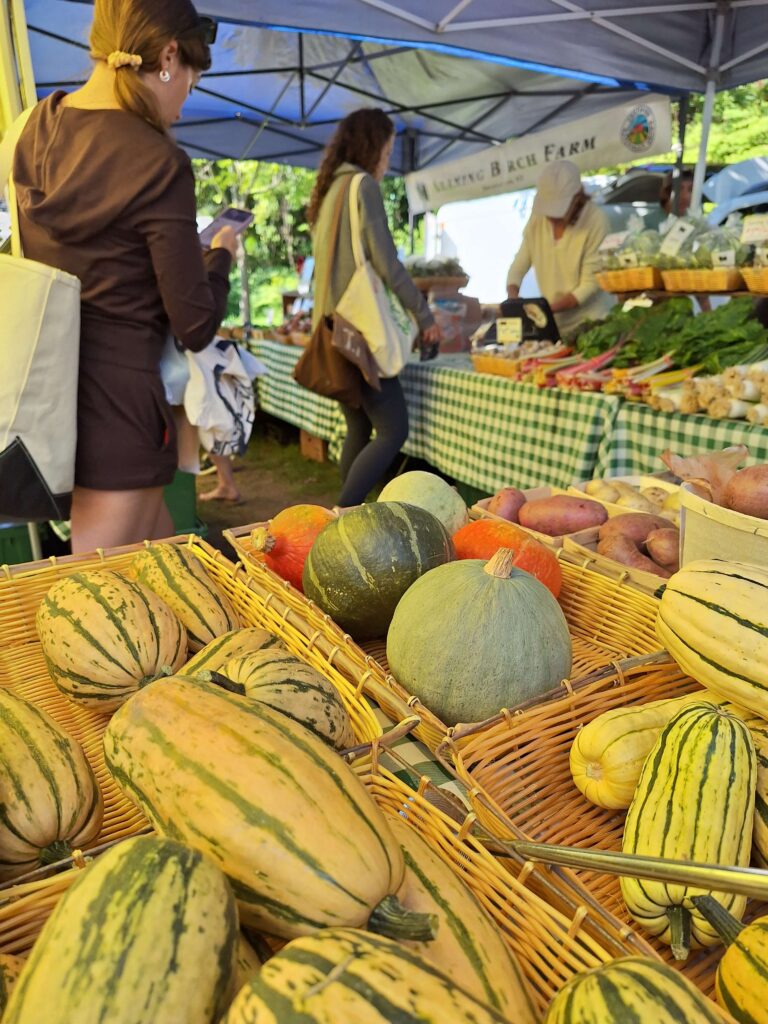
In contrast, the local farmers’ market definition of organic shifts from a bureaucratic checklist to a personal relationship. When you buy organic food at a local market, you are usually buying from small-scale, highly diversified farms located only miles away.
Interestingly, most vendors at a farmers market that follow organic practices do not carry the official USDA organic seal. For a small family farm operating on thin margins, the thousands of dollars in annual certification fees and the mountain of paperwork required by the USDA can be prohibitive. Instead, many growers follow the USDA Organic guidelines and practice “beyond organic” farming without the government sticker. Although organic pesticides are available, most small market farmers rarely use them. Instead, they use compost, crop rotation, cover crops, insect-blocking netting, and beneficial insects to manage pests and soil health naturally. After all, isn’t organic farming all about caring for the soil and environment?
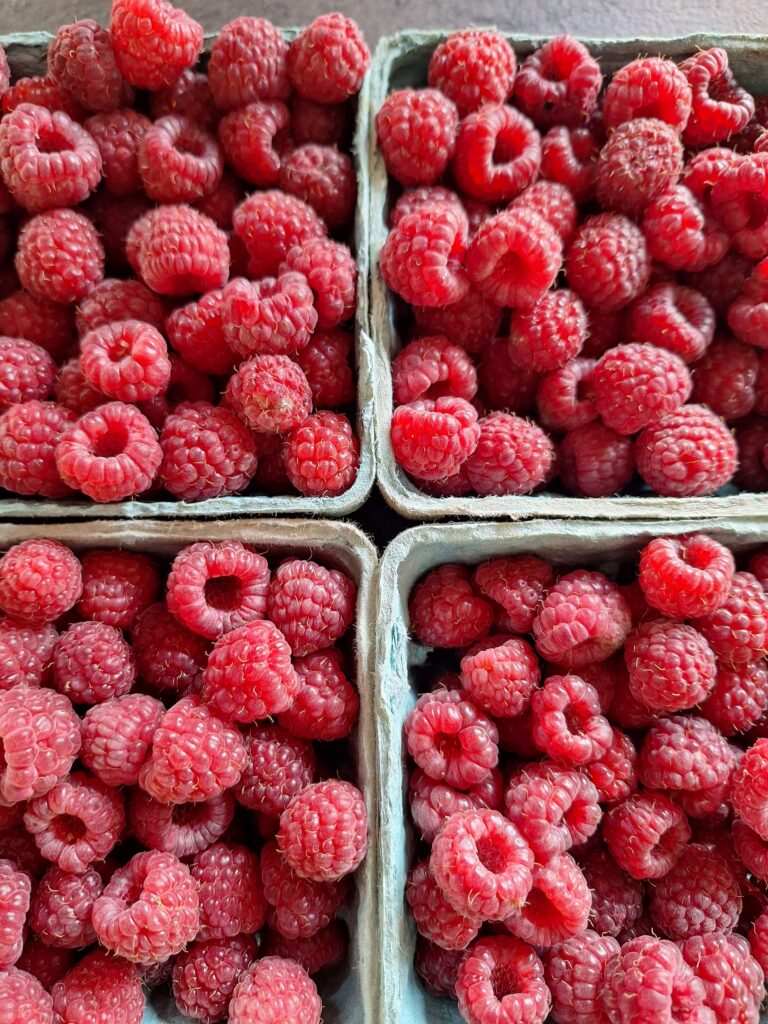
The hallmark of farmers market organic is freshness and biodiversity. Because the food does not need to survive a cross-country journey, farmers can grow varieties chosen exclusively for their superior flavor and nutritional density. The produce is typically harvested within 24 to 48 hours of sale, meaning it retains its peak vitamin content and taste.
Key Differences at a Glance
When choosing between these two options, consumers generally weigh three main categories:
- Transparency and Trust: Commercial organic relies on a third-party regulatory seal. You have to trust the government sticker because you will never meet the corporate farm owner. At a farmers market, transparency is direct. You can look the farmer in the eye and ask exactly how they manage pests or treat their soil.
- Environmental Impact: Commercial organic reduces the chemical load on the earth but still carries a massive carbon footprint due to global shipping logistics and plastic packaging. Farmers market organic has a much smaller supply chain, minimal packaging, and supports local biodiversity.
- Economics: Money spent on commercial organic food primarily benefits large agribusinesses and grocery conglomerates. Money spent at a farmers market goes directly into the pocket of the local grower, circulating wealth back into your immediate community.
Making the Right Choice
Neither option is necessarily superior; each serves a different purpose in a modern lifestyle. Commercial USDA organic lets busy families reduce chemical exposure conveniently and affordably during weekly supermarket runs. It provides consistency and convenience that local farmers’ markets simply cannot match year-round in colder climates.
Conversely, farmers’ market organic offers an artisanal, community-driven connection to our food system. It rewards the palate with vibrant flavors, supports the local economy, and champions small-scale ecological stewardship.
As interest in sustainable agriculture grows, consumers have more choices than ever. Understanding the difference between certification and farming practices can help shoppers make informed decisions based on what matters most to them.
The Saratoga Farmers’ Market is open Wednesdays, 3–6 PM, and Saturdays, 9 AM–1 PM, at High Rock Park in Saratoga Springs, and Mondays, 2–5 PM in Clifton Park. For details, visit saratogafarmersmarket.org or follow on Facebook and Instagram.